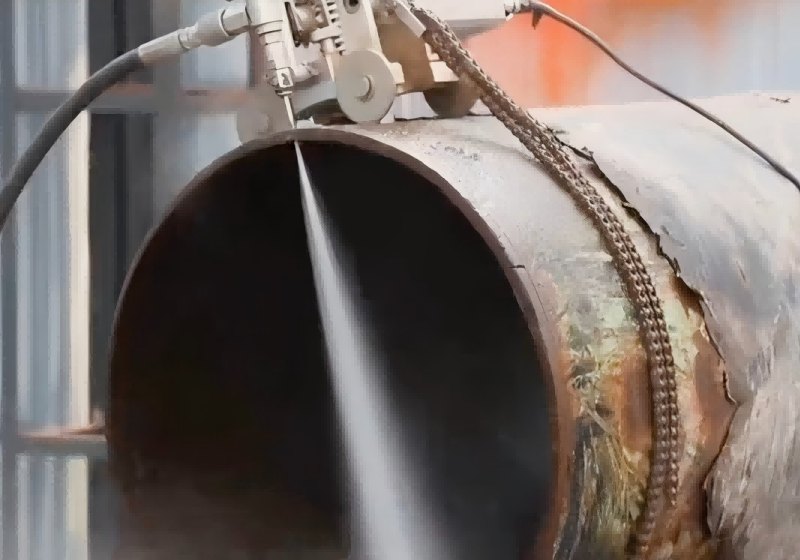
In high-risk industries such as petrochemical and natural gas storage and transportation, maintenance, renovation, and demolition operations for pipelines and storage tanks are always accompanied by extremely high safety risks. The high temperature, sparks, and toxic gases generated by traditional cutting tools are like a Sword of Damocles hanging over the heads of workers. Water jet cutting technology, with its unique cold cutting properties, is gradually replacing traditional methods and becoming a safe and efficient solution in high-risk environments.
Water jet cutting, also known as high-pressure water jet cutting, works by pressurizing ordinary tap water to an ultra-high pressure (30-350 MPa) through multi-stage boosting, forming a high-speed jet through an extremely fine diamond or sapphire nozzle (0.08-0.5 mm diameter), and then mixing with abrasive particles such as garnet sand. The cutting is achieved by utilizing the impact kinetic energy of water and the micro-cutting effect of abrasives.
This cold cutting method brings revolutionary safety features:
- No sparks or high temperatures: The cutting process generates almost no heat, completely eliminating the risk of fire and explosion caused by traditional thermal cutting methods.
- No heat-affected zone: It does not change the metallographic structure of the metal material, avoiding thermal deformation and stress concentration.
- Environmentally friendly and pollution-free: It mainly uses water and natural abrasives as cutting media, produces no toxic gas emissions, and wastewater can be recycled after precipitation treatment.
In the oil and gas pipeline sector, the advantages of water jet cutting compared with traditional cutting methods are clear:
| Comparison Dimension |
Water Jet Cutting |
Traditional Thermal Cutting (Flame/Plasma) |
Laser Cutting |
| Safety |
Zero fire risk, suitable for operations in explosive environments |
High risk of explosion |
Medium risk with sparks and smoke |
| Cutting Quality |
Smooth, burr-free cuts without thermal deformation |
Large heat-affected zone, rough cuts prone to deformation |
High precision, but poor performance on thick materials |
| Material Compatibility |
Can cut almost all materials, including composite materials |
Only applicable to conductive metal materials |
Poor performance on reflective materials with material limitations |
| Environmental Impact |
Pollution-free with recyclable wastewater |
Generates large amounts of toxic gases and smoke |
Produces small amounts of smoke requiring exhaust systems |
| Operational Flexibility |
Portable equipment can access narrow spaces |
Large equipment cannot access restricted areas |
Requires large space with complex systems |
Considering the unique characteristics of the oil and gas pipeline industry, water jet equipment is developing in the direction of portability and multi-functionality.
-
Mainstream Equipment Types:
- Pre-mixed low-pressure water jet: Operating at 30-50 MPa, it is compact and lightweight (about 300 kg), suitable for scenarios with small single cutting volumes, requiring abrasive refills every 40 minutes.
- Post-mixed high-pressure water jet: Operating at 100-350 MPa, it has fast cutting speed and can operate continuously for 12-18 hours, suitable for large-scale cutting projects.
-
Specialized Tooling Configurations:
- Magnetic trolley: Uses magnetic attraction to adhere to pipeline surfaces for circumferential cutting, suitable for pipes with diameters 120-1850 mm.
- Rail trolley: Uses magnetic tracks for high-precision circumferential cutting, suitable for tanks with diameters 800-10000 mm.
- Chain trolley: Suitable for non-magnetic non-metallic pipes, secured by chains for circumferential cutting.
- Pipe opener: Achieves precise pipe opening operations with diameters up to half the pipe diameter.
-
Operational Procedures:
- Quick deployment of equipment, connecting water and power sources.
- Selection of appropriate cutting tooling based on cutting requirements.
- Setting cutting parameters (pressure, speed) through a remote controller.
- Operators monitor operations remotely from a safe distance of 6-10 meters.
-
Solutions to Common Problems:
- Reduced cutting efficiency: Check water pressure stability, replace worn nozzles, and adjust abrasive ratio.
- Nozzle blockage: Clean nozzles immediately and strengthen water purification (using filters with 1-5 μm filtration precision).
- Fluctuating water pressure: Inspect water valves and filters, repair or replace faulty pumps.
- Leaking cutting head: Replace sealed O-rings and check connection interfaces.
-
Safety Assurance Measures:
- Explosion-proof design: All electrical components adopt explosion-proof design and pass GB/T3836 series explosion-proof certification.
- Remote operation: Equipped with 6-10 meters control cables for remote equipment operation.
- Environmental monitoring: Integrated with gas detection modules for real-time monitoring of gas concentrations in the operation environment.
- Safety training: Operators must receive professional training to master equipment operation and emergency response procedures.
5.Conclusion
In the oil, gas, and chemical industries, safety is always the top priority. Waterjet cutting technology, with its unique cold-cutting characteristics, provides a revolutionary solution for cutting operations in high-risk environments. Looking ahead, as the technology continues to advance and improve, waterjet cutting will play an even greater role in more high-risk industries, safeguarding workers’ safety and enhancing the overall quality of industry development.

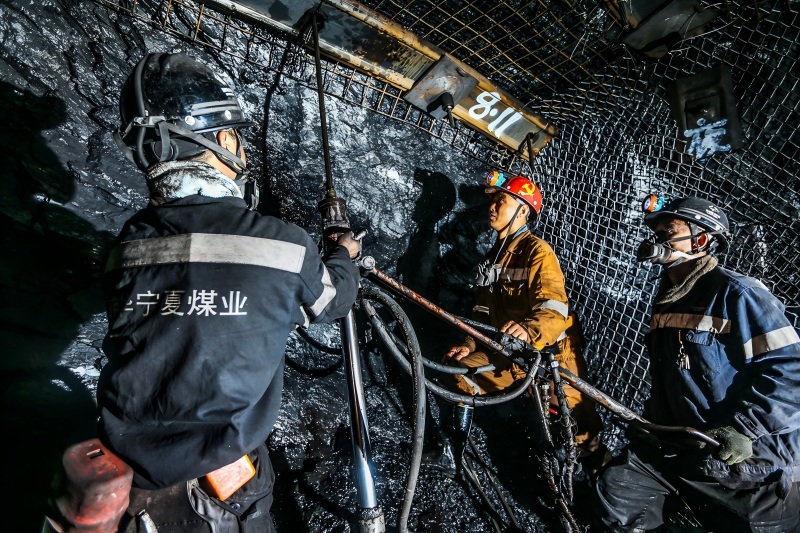 From 740 million to 1.11 billion, waterjet technology ignites the coal mining equipment market.
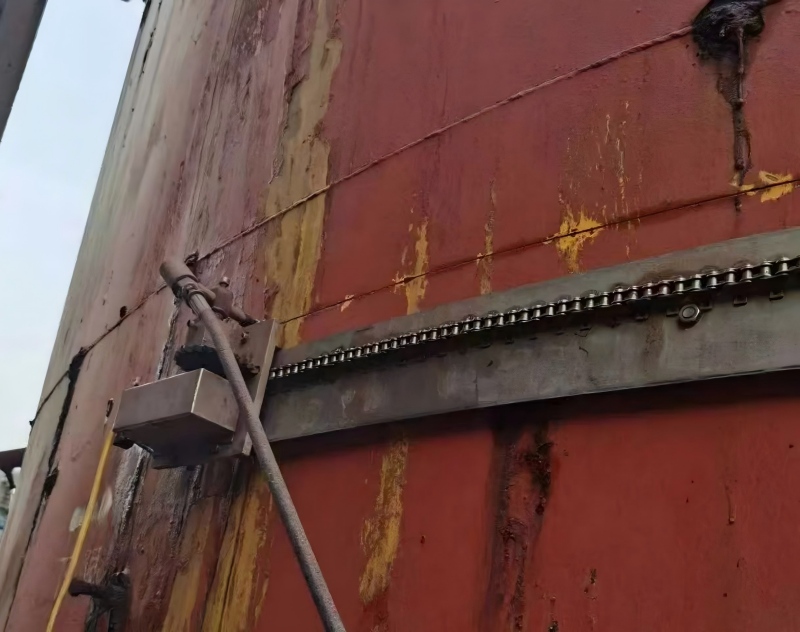 Industrial Pipe Cutting Machine