Oil & Gas
Why Use Low-Pressure Waterjet Cutting
- Eliminates Fire and Explosion Risks – Ideal for Hazardous Environments
Oil and gas sites commonly contain flammable gases, oil–gas mixtures, and combustible dust. Traditional cutting methods such as flame cutting or plasma cutting generate open flames, high temperatures, arcs, and molten metal slag, which can easily trigger fires or explosions.
Low-pressure waterjet cutting is a purely cold-cutting process. It produces no flame, no heat, no sparks, and no electric arc, with the cutting-zone temperature remaining close to ambient. This fundamentally eliminates ignition sources, enabling safe operation in pressurized pipelines, confined spaces, and classified hazardous (explosion-proof) areas.
- Low Damage and Low Stress – Protects Pipeline Integrity
Low-pressure waterjet cutting relies on the kinetic energy of water mixed with abrasives (such as garnet) rather than thermal energy. As a result, it creates no heat-affected zone (HAZ), causes no metallurgical changes, and introduces no thermal deformation, residual stress, or microcracks.
This avoids common issues associated with thermal cutting, such as wall-thickness reduction, strength degradation, and increased difficulty in subsequent welding repairs. It is especially suitable for cutting in-service pipelines and sensitive areas such as weld seams.
- High Flexibility for Complex Operating Conditions
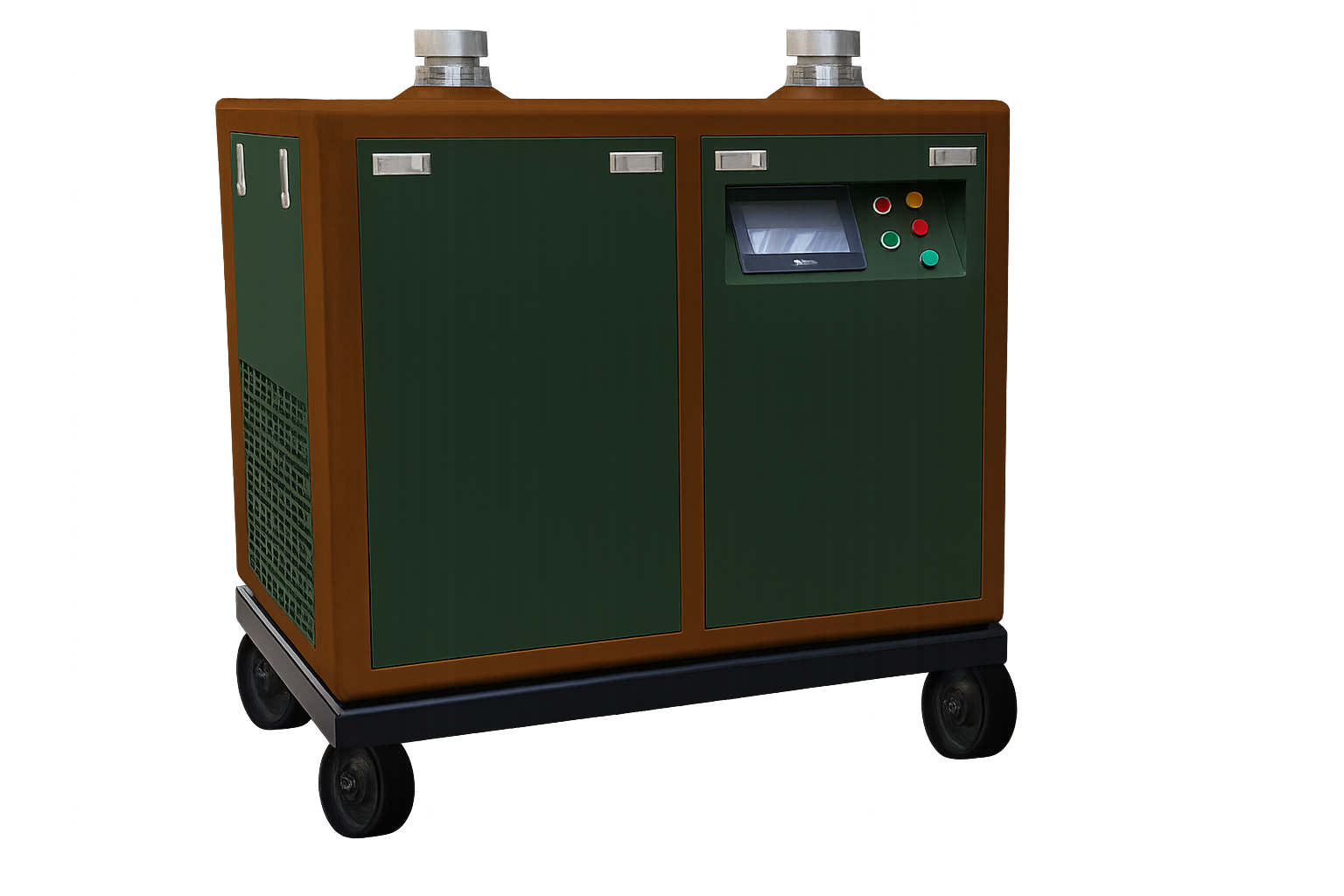
Low-pressure waterjet systems are compact and can be modularly designed for mobile platforms, robotic systems, or confined-space operations. They support multi-angle cutting, complex geometries, and bevel cuts.
With minimal vibration during operation, they are well suited for challenging environments such as elevated structures, underground facilities, offshore platforms, and subsea pipeline applications.
- Environmentally Friendly and Cost-Effective
The cutting process generates only a small amount of water–abrasive residue, with no toxic fumes, dust, or heavy-metal emissions, fully complying with environmental regulations in the oil and gas industry.
Residues can be collected for recycling or compliant disposal. In addition, waterjet cutting eliminates post-cut processes such as extensive grinding or stress-relief treatment, reducing downtime, shortening project cycles, and lowering overall operating costs.
Applications in the Oil and Gas Industry
- In-Service Pipeline Modification and Maintenance
- Cutting during pipeline rerouting, branching, and plugging operations;
- Removal and replacement of corroded sections, cracks, or defective welds;
- Emergency cutting for pipeline repairs in confined spaces and explosion-proof zones.
- New Pipeline Construction and Prefabrication
- Bevel cutting and complex-shape cutting during workshop prefabrication;
- On-site fit-up cutting and fine length adjustments during installation;
- Damage-free cutting of composite or coated pipes, preserving both coating and base material integrity.
- Oil and Gas Facility Equipment Cutting
- Cutting and opening operations on storage tanks, pressure vessels, separators, and valves;
- Precision cutting at pipeline–equipment interfaces to accommodate different diameters and connection angles.
- Offshore Platforms and Subsea Pipelines
- Pipeline modification and maintenance cutting on offshore platforms;
- Cutting operations during subsea pipeline recovery, repair, and replacement, adapted to high-pressure underwater environments.
- Supporting Cutting for Hot Tapping and Line Stopping
- As a critical supporting process for hot tapping and line stopping technologies, low-pressure waterjet cutting is used for pre-opening positioning cuts and post-isolation pipeline separation.
- This enables non-shutdown operations, ensuring continuous oil and gas supply while maintaining the highest safety standards.